How to Check Fire Rated Door Certification in Malaysia
A contractor hands over a fire-rated door certificate for your project. The document states a two-hour fire resistance rating, and the installed door appears correct at first glance. But how can you confirm that the certificate actually covers the doorset installed on-site?
A certificate alone is not enough. You need to establish whether the installed leaf, frame, seals, hardware and any glazing match the configuration covered by the supporting documentation, including its permitted variations.
This guide explains how to verify fire-rated door certification in Malaysia, from checking identification labels and certification records to reviewing test reports and inspecting the completed installation.
What Does Fire Rated Door Certification Actually Cover?
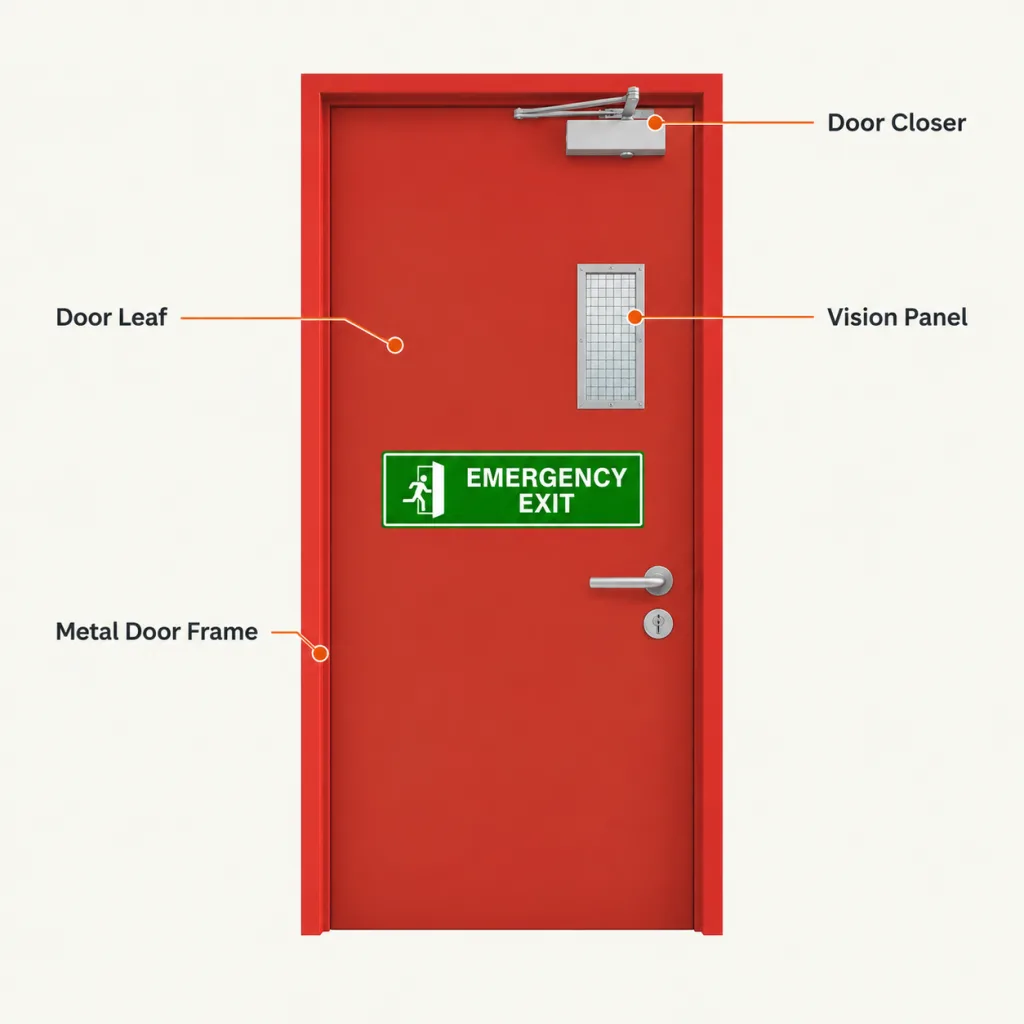
Fire performance evidence is normally tied to a specific doorset build, not a door leaf sold in isolation. A doorset is the door leaf plus the parts that affect fire and smoke performance.
-
Door leaf: The slab itself, including construction, thickness, core, facings, edges and any factory preparation.
-
Frame: The frame type, material and how it is fixed into the opening.
-
Seals: Intumescent seals, which expand in heat, and smoke seals where required. Their location and continuity matter.
-
Hardware: Hinges, latch or lock and closer. For pairs, any coordinator or sequence device and other specified pair hardware.
-
Openings: Any vision panel and its approved glazing system, including size limits and fixing method.
Two important terms you will see in certification documents are:
Traceability: How you link an installed doorset back to the correct documents using a serial number, batch number or job reference.
Permitted variations: Changes the supporting evidence explicitly allows, such as certain size ranges or hardware options.
How to Verify Fire Rated Door Certification in Malaysia
Before reviewing the full documentation, use this quick checklist:
-
Confirm the required fire resistance rating and doorset configuration in the project specifications.
-
Request the relevant fire test report, certification or listing, and supporting technical documents.
-
Verify the issuing body, document reference, applicable scope and current status where relevant.
-
Match the installed doorset, including its frame, seals, hardware and glazing, to the documented configuration.
-
Check the installation against the manufacturer’s instructions and resolve discrepancies before acceptance.
The applicable testing, certification and approval requirements depend on the product, project specifications and relevant Malaysian regulatory requirements. Confirm the required evidence with the responsible project professional or authority rather than relying on a single document.
Step 1: Check Door Labels and Traceability
Your fastest on-site screen is traceability: can you link the physical doorset you are looking at to the correct evidence pack?
Many systems use a permanent label, plate, tag, ink stamp or other marking, but the format and location vary by manufacturer and certification scheme.
What to Look for on the Door and Frame
- Durable marking: A label, plate or marking intended to remain legible after finishing and routine use.
-
A reference you can match: A serial number, batch number, job reference, model code or doorset ID that ties to delivery notes and the door schedule.
-
Consistency: Where both leaf and frame are marked, check that they relate to the same doorset and have not been mixed between deliveries.
-
Rating claim, if shown: Treat any “1 hour / 2 hour” marking as a prompt to verify the supporting scope, not proof on its own.
If markings are missing, painted over or inconsistent, verification may still be possible. However, request a written explanation of the supplier’s traceability method, showing how installed locations map to manufacturing and document records.
Do not assume that every fire rated doorset must display the same type of SIRIM label. Product certification marks, regulatory labels and manufacturer identification markings serve different purposes. Check the marking requirements of the applicable certification scheme and confirm how the installed doorset is traced to its supporting documents.
Where a SIRIM mark or label is referenced, use SIRIM’s official marks and labels guidance rather than assuming what the label must look like.
Step 2: Verify Test Reports and Certification Documents
Reviewing the supporting documents helps establish what has been tested, certified or approved, and whether the evidence applies to the doorset installed on-site.
Each document serves a different purpose and should be assessed accordingly.
What Each Document Type Can (and Cannot) Prove
| Document Type | Useful For | Does Not Prove on Its Own |
|---|---|---|
| Fire resistance test report | How a specific tested specimen performed, what was included in the test build and stated limitations. | That other similar doors are automatically covered or that site changes are acceptable. See SIRIM product testing FAQs. |
| Product certification / listing (where applicable) | That a product or doorset is certified under a defined scheme and scope, with identification and traceability conditions. | That your installed doorset is within scope unless you can link the installed build to the certified configuration. See SIRIM product certification scheme. |
| JBPM / BOMBA-related product or project documents (where applicable) | Identifying relevant fire authority requirements, product-related supporting evidence and project submission or approval records. | That every installed doorset matches the tested or certified configuration. Applicable JBPM requirements and document scope must be checked separately. See JBPM referenced standards for material certification. |
| Doorset datasheet / scope document | Permitted configurations and dimensions, including leaf thickness, frame options, seals, glazing limits and compatible hardware. | Performance evidence unless it clearly corresponds to the same tested, assessed or certified system and revision. |
| Installation instructions | How the doorset must be installed, including fixings, wall types, packing or infill methods and tolerances. | Certification or rating; the instructions support correct installation within scope. |
Minimum Evidence Pack to Request
-
Fire test report or formal assessment for the relevant rating and configuration, such as single or double leaf, with or without a vision panel.
-
Certificate or listing, if the product is certified under a scheme.
-
Doorset scope or datasheet showing permitted sizes, leaf thickness and required seals.
-
Installation instructions for the system being installed.
-
Hardware and glazing details where your doors include closers, particular locksets, panic hardware or vision panels.
If a supplier provides only a fire resistance test report, this should not automatically be treated as evidence of product certification.
A test report documents the performance of a particular tested specimen under stated conditions, whereas product certification applies within the scope of a defined certification scheme.
A fire resistance test report does not automatically expire after a fixed period. SIRIM QAS states that test reports generally have no validity period unless a regulatory agency specifies otherwise. Product certification licences and applicable authority approvals may have separate validity, renewal or status requirements. Verify each document according to its own requirements rather than applying the same expiry rule to every document.
Confirm which certification, approval or supporting documents are required for the specific project, and whether the supplied doorset configuration is covered by the available evidence.
Where requirements remain unclear, seek clarification from the responsible project professional or relevant authority.
Six Checks to Verify the Certificate or Supporting Record
Use this framework after identifying which documents you have: test evidence, certification or listing where applicable, and technical scope.
Keep notes against each point so the file is ready for project review or audit.
| What to Verify | What You Should See | If Unclear |
|---|---|---|
| 1. Issuing Body | Clear issuer identity and document type, such as test report, certificate or listing. | Confirm through the issuer's published channels. See SIRIM marks and labels. |
| 2. Reference and Version | Unique reference number, issue date and revision or version. | Ask for the latest applicable revision and whether any document was superseded or withdrawn. |
| 3. Product Identity | Doorset description, model code and a traceability method, such as serial, batch or job reference. | Request written mapping from installed doorset IDs to the document scope. |
| 4. Rating Claimed | Stated fire resistance period and its basis, such as test, assessment or certification scope. | Confirm the rating applies to your configuration, including pair, vision panel, hardware and size limits. |
| 5. Scope and Limits | Leaf construction, thickness, frame type, seals, hardware families, glazing system, maximum dimensions and permitted variations. | If the site build differs, pause acceptance and obtain written confirmation or a formal assessment covering the variation. |
| 6. Current Status (if applicable) | Evidence that the certificate or listing remains applicable and matches the supplying factory and product. | Check the issuing body's official records or directory where available. Do not assume the test report itself has a fixed expiry date. |
Tip for quick test report checks: Confirm the report or assessment covers the same doorset type (single or pair), frame type, any glazing, key seal arrangement and maximum tested or assessed sizes.
If a change you need is not listed as a permitted variation, treat it as outside scope until formally confirmed.
Step 3: Match Certification Documents to the Door Schedule
This is where verification becomes practical.
A door schedule is the project list of doors by location and required performance, such as fire resistance rating, leaf type and whether a vision panel is needed.
Treat each doorset type as its own check item, even if sourced from the same supplier.
In Malaysia, relevant standards include MS 1073 for fire resistance testing of doorsets and the MS 1601 series covering aspects such as design variations and installation. For example, MS 1601-1 addresses design requirements and variations from tested specimens, while MS 1601-3 addresses installation requirements.
These standards provide important technical references, but the exact requirements applicable to a project must be confirmed against its approved specifications and relevant authority requirements.
You can check the published standards through the Department of Standards Malaysia catalogue.
| Doorset Type | Verify in Documents | Verify On-Site | Common Mismatch Risk |
|---|---|---|---|
| 1-hour fire rated doorset | Supported duration, build and thickness, maximum size, required seals and permitted hardware families. | Leaf and frame match the documented system; seals and hardware are present as specified. | Hardware substitution, missing seals or oversized leaf. |
| 2-hour fire rated doorset | Evidence supports that configuration at 2 hours, including limits on apertures, hardware and sizes. | Correct 2-hour-supported doorset installed at required locations; closes and latches reliably. | 1-hour build installed where 2-hour is specified, or fit-out changes outside scope. |
| Double leaf fire rated doorset | Pair configuration scope, meeting stile requirements, required pair hardware and latching approach. | Closing sequence works where applicable; both leaves latch as intended; meeting gaps are acceptable. | Missing coordinator or required pair hardware; unreliable latching due to misalignment. |
| Fire rated doorset with vision panel | Approved glazing system and limits, including size, position, glass specification and glazing method. | Vision panel matches documented glazing details; no damage or unauthorised rework. | Vision opening added or enlarged later, or glazing method differs from documented system. |
What Determines the Fire Rating Your Project Needs?
Several factors can influence the required fire-door specification.
These may include:
- building type
- occupancy
- door location
- compartmentation design
- escape route requirements
- surrounding wall or barrier rating
- approved fire-safety plans
- applicable local authority requirements
For this reason, buyers should avoid selecting a fire-rated door only from a catalogue without checking the project requirement first.
A door specified for one part of a building may not suit another area, even if both locations need fire protection.
For a more detailed overview of fire door compliance, documentation and building requirements, read our Fire Rated Door Compliance Checklist for Malaysian Buildings.
Step 4: Inspect the Installed Fire Rated Door
Documents define what should be installed; the on-site inspection confirms whether it has been installed correctly.
Use the manufacturer’s installation instructions for the tolerances and installation method applicable to that system.
Avoid relying on universal door-gap rules, as limits can vary between doorset systems.
A. Clearances, Alignment and Closing Action
-
Clearances: Confirm perimeter gaps are within the doorset’s documented tolerances and consistent around the stop line.
-
Alignment: The door operates freely without binding or distortion that prevents full closing.
-
Self-closing and latching: The closer reliably closes the door and the latch engages from realistic opening positions.
-
Hold-open conditions: Investigate wedges or taped-open doors. If hold-open is required, confirm the specified device is installed and operates as intended.
B. Intumescent and Smoke Seals
-
Presence and continuity: Check for missing sections, damage or poorly formed joints.
-
Correct location: Seals are fitted to the leaf edge, frame or both, as required by the system detail.
-
Condition after finishing: Look for paint build-up, cuts or seal displacement that could compromise function.
C. Hinges, Locks, Latches and Closers
-
Hinges: Confirm the correct type and quantity for the doorset, with all fixings present and secure.
-
Latch or lockset: Hardware matches the documented scope and latching is consistent.
-
Closer: The closer is installed and adjusted so the door closes and latches without user workarounds.
A fire rated door that does not close and latch reliably presents a practical safety concern, even if supporting documents are available.
D. Frames, Fixings and Surrounding Construction
-
Frame anchorage: Fixing methods and spacing follow the system instructions, and the frame is not pulled out of square.
-
Perimeter infill and packing: Where accessible, check that the specified infill or packing method has been used.
-
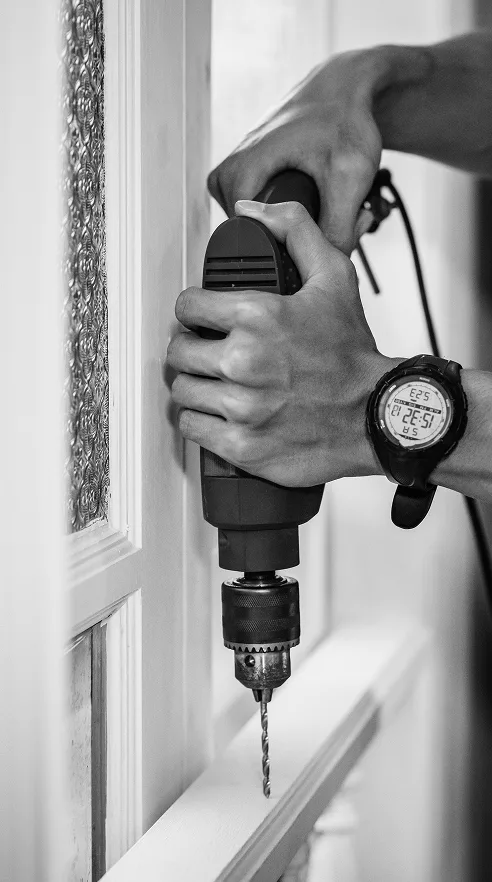
Uncontrolled modifications: Investigate site drilling, excessive trimming or cut-outs not described as permitted variations.
E. Vision Panels and Glazing (If Applicable)
-
System match: Confirm the glass specification and glazing method match the approved details, including beads, gaskets, liners and intumescent components.
-
Integrity: Check for cracks, loose beads or missing parts.
-
Post-installation changes: Treat enlarged or newly added openings as a stop-and-review issue against the documented scope.
What If the Fire Rated Door or Documents Don't Match?
Not every unclear point means the doorset is uncertified. However, unresolved mismatches create project handover risk.
Use the following actions to decide what to do next.
-
Traceability is unclear: You cannot link the installed doorset to the evidence pack. Request a written traceability map connecting doorset IDs and locations to delivery records, manufacturing records and the relevant certificate or report scope.
-
Documents do not fit the configuration: The evidence appears to cover a different build, such as a single leaf instead of a pair, or a door without a vision panel instead of one with glazing. Pause acceptance and request evidence for the exact configuration or a formal assessment explicitly permitting the variation.
-
Components have been mixed or substituted: Leaf, frame, seals, glazing or hardware appear to come from different systems without confirmation that the combination is covered. Require written confirmation that the combination falls within the tested, assessed or certified scope.
-
Site modifications after delivery: Trimming, re-edging, new cut-outs or enlarged vision panels should be treated as non-conforming until checked against the scope by the responsible qualified professional.
-
Function suggests non-conformance: The door does not self-close or latch reliably. Record the issue as a defect and rectify it before acceptance.
Why Does the Complete Door Set Matter?
A fire-rated door is a system, not just a door leaf.
The leaf, frame, hinges, lockset, closer and other specified components work together as a tested assembly.
If one key component differs from the approved configuration, the installed system may no longer match the tested doorset.
Therefore, project teams should check that the supplied door set follows the approved configuration rather than mixing parts from different systems without confirmation.
This is also why installation quality matters. JBPM’s referenced standards include a code of practice for installing fire-resistant doorsets under MS 1601-3:2009.
Post-Inspection Decision Guide
Documented Match
Traceability is clear, the evidence scope matches the door schedule, and the installation aligns with the system instructions. Proceed with the project’s normal sign-off and record-keeping process.
Clarification Required
Information is incomplete or ambiguous, but there is no clear indication of a material mismatch. Hold acceptance pending written clarification and updated documents.
Escalate Before Acceptance
A material mismatch is suspected, such as the wrong configuration, unapproved modifications, conflicting documents or an inability to confirm authenticity or current status where relevant.
Escalate the issue to the responsible qualified professional and follow the project’s authority process before accepting the doorset.
How to Document Fire Door Verification for Handover
Maintaining clear verification records supports project inspections and handover.
These records also provide a reference for assessing whether subsequent alterations to the doorset remain consistent with the documented fire-rated configuration.
Each installed doorset should be identifiable by location and linked to its supporting evidence.
Suggested Handover Evidence Pack
-
Door schedule mapping: Location, required rating, doorset reference or ID, and configuration notes such as single or pair, with or without a vision panel.
-
Photos: Markings or labels, full door elevation, hinge and latch edges, closer, seals and glazing details where applicable.
-
Document bundle: Relevant certificate or listing, key scope pages from the test report or assessment, datasheets and installation instructions for the installed build.
-
Inspection and defects record: Issues found, corrective works completed and sign-off for closing and latching function.
If you need to confirm whether a product is listed under a Malaysian certification directory, use the issuing body’s official directory or verification channel where available.
Where relevant standards are cited, you can also cross-check published Malaysian Standards through the Department of Standards Malaysia catalogue.
How to Choose a Fire Rated Door Supplier in Malaysia
Because fire door evidence is configuration-specific, it helps to engage suppliers who can provide a doorset-specific evidence pack and explain what is and is not within scope.
This is especially important when comparing 1-hour and 2-hour ratings, single and double leaf configurations, or doors with and without vision panels.
If you are still comparing door types, ratings and supplier options, read our guide to choosing a fire rated door in Malaysia before reviewing the certification documents.
Sunstar Door offers product categories that buyers can explore based on their project requirements:
Regardless of supplier, agree early on what documents will be issued at handover.
These may include test evidence or assessment, certification or listing where applicable, datasheets, installation instructions and the method used to trace each doorset to the supporting documents.
The information should then be reconciled against the project door schedule before manufacturing and delivery.
Conclusion
To verify fire rated door certification in Malaysia, treat the process as a complete doorset check rather than relying on a certificate or label alone.
Start by confirming traceability between the installed door and its supporting documents. Then verify what the documents actually establish, including the difference between a fire resistance test report, product certification or listing, and project-related approvals.
Next, match the exact configuration—including fire rating, size, frame, seals, hardware and any glazing—to the documented scope and permitted variations.
Finally, inspect the installed doorset and resolve any discrepancies before acceptance.
A clear verification process helps contractors, consultants and project owners make more informed decisions during procurement, inspection and handover.
Frequently Asked Questions About Fire Rated Door Certification
How can I quickly tell if a fire rated door is certified on-site?
Check traceability first. Find the doorset’s marking, such as a label, plate, tag or stamp, and match its reference to the correct evidence pack for the same configuration and rating.
If you cannot link the installed doorset to the documents, request a written traceability map before acceptance.
What documents should I request from a fire door supplier for project handover?
Request a doorset-specific pack containing the relevant fire test report or formal assessment, any applicable certificate or listing, the doorset scope or datasheet, and installation instructions.
For doors with vision panels or particular hardware, request details confirming those components fall within the documented scope.
Can a double leaf fire rated door be certified if only one leaf has a label?
Possibly, but do not assume.
You should be able to trace the pair, including both leaves and the frame, to the same documented doorset configuration.
Ask the supplier to explain the identification method for that system in writing, then verify the pair’s configuration and closing or latching behaviour on-site.
Are vision panels allowed in a fire rated door in Malaysia?
They can be, provided the doorset evidence explicitly covers the vision panel and specifies the approved glazing system.
This includes relevant size and position limits, glass specifications and glazing methods.
Any added or enlarged vision opening should be reviewed against the documented scope before acceptance.
What are common installation defects that can undermine a certified fire doorset?
Common issues include gaps outside the system’s documented tolerances, missing or damaged seals, hardware substitutions that are not covered by the evidence, and doors that do not self-close or latch reliably.
For double leaf doors, missing pair hardware and poor alignment can also affect operation.
Need a Fire-Rated Doorset for Your Project?
Planning a project that requires 1-hour or 2-hour fire rated doors?
Share your door schedule, required fire rating, dimensions and project specifications with Sunstar Door to discuss suitable doorset options and available supporting documentation.